If you are getting ready to sell in Oak Island, it is easy to wonder whether you need a big remodel or just a smart plan. In a coastal market, buyers often react first to signs of moisture, wear, and maintenance, not just style. The good news is that you do not need to update everything at once to make a strong impression. With the right pre-listing priorities, you can focus on the fixes that build buyer confidence and help your home show well from day one. Let’s dive in.
Why Oak Island updates need a coastal strategy
Oak Island homes face conditions that inland homes do not. North Carolina DEQ notes that oceanfront development in the state is exposed to erosion from wind, waves, and tides, and that storms such as hurricanes and nor’easters can damage a home quickly.
That reality shapes what buyers notice. In Oak Island, visible wear can suggest more than age alone. Peeling paint, rust, soft trim, mildew odors, and water stains may read as signs of deferred maintenance in a humid, salt-air environment.
The Town of Oak Island also applies local rules that matter when you are planning updates. Its Development Services office handles building, CAMA, FEMA, fire, zoning, and stormwater compliance, and construction on the island must meet 150 mph wind-zone requirements.
Start with what buyers see first
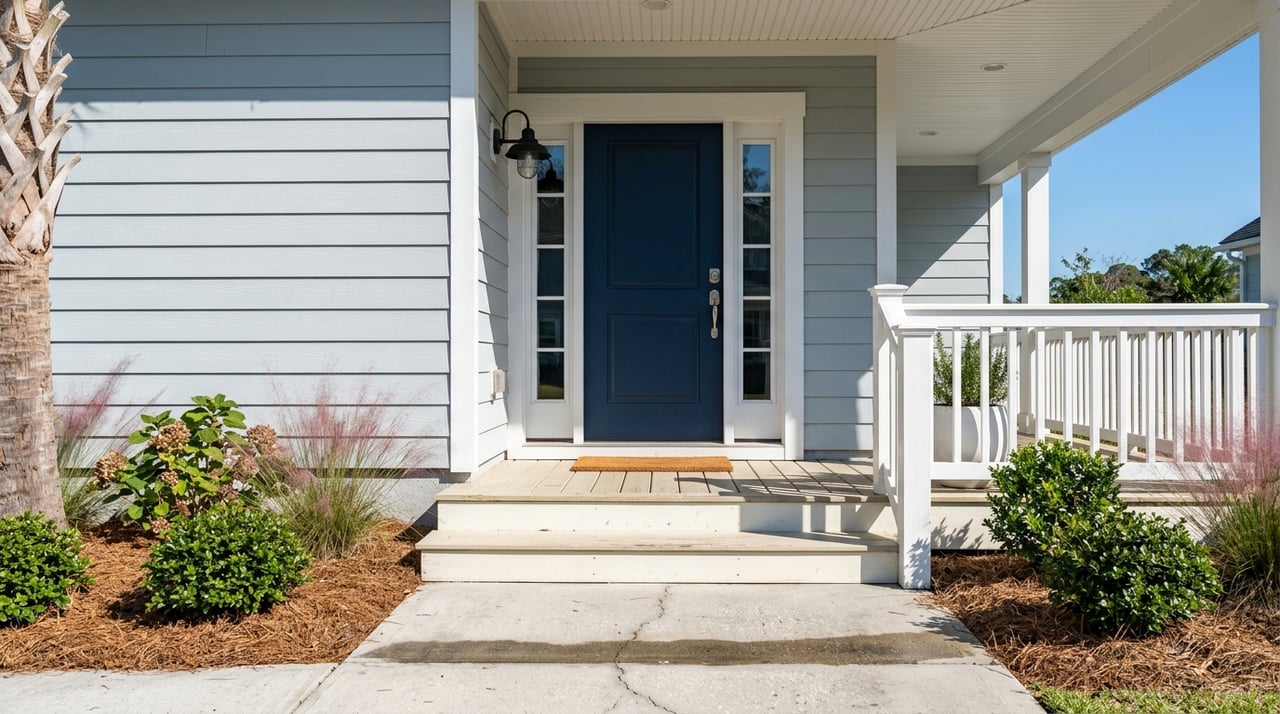
First impressions still matter, especially online and during early showings. Research from Realtors highlights curb appeal basics like porches, landscaping, outdoor lighting, and pathways as core first-impression features.
Before you think about a large renovation, look at your home the way a buyer will. Ask whether the exterior looks cared for, whether the front entry feels inviting, and whether there are visible signs of moisture or corrosion.
In many Oak Island homes, the highest-value first step is not dramatic. It is making the property feel clean, maintained, and ready.
Focus on exterior visual confidence
Exterior paint is one of the clearest examples. In the 2025 Remodeling Impact Report, Realtors most often recommended painting the entire home before listing, along with painting a room and replacing roofing when needed.
If your siding, trim, railings, or porch areas look weathered, fresh paint can quickly improve photos and curb appeal. In a beach setting, this also helps reduce the visual impact of salt and moisture exposure.
Front doors are another practical upgrade. The same report found that a new steel front door had an estimated 100% cost recovery, while a new fiberglass front door had an estimated 80% cost recovery.
Clean and refresh interior surfaces
Inside the home, simple refreshes often do more than sellers expect. Realtors’ consumer guidance points to cleaning windows, carpets, lighting fixtures, and walls as meaningful ways to improve how a home presents.
These projects are especially useful when your listing timeline is short. They photograph well, they do not require changing the layout, and they help buyers focus on the space instead of the upkeep.
Staging can also help buyers picture themselves living in the home. For sellers who want a more polished launch, that kind of preparation can support stronger listing presentation without starting a full remodel.
Treat moisture issues as listing priorities
In Oak Island, moisture-related repairs should move to the top of your list. NC State Extension identifies roof leaks, leaky windows, damp crawlspaces, flooding, and high indoor humidity as common mold triggers.
That matters because mold can form quickly when water problems are not corrected. If you have visible water staining, musty odors, crawlspace dampness, or window leakage, those are not cosmetic details to leave for later.
They are buyer-confidence issues. They can also affect inspections, repair negotiations, and disclosure conversations.
Check the roof, windows, and crawlspace
A smart pre-listing walkthrough should include the roof, exterior trim, windows, and any crawlspace or lower-level moisture concerns. If any of these areas show active problems, fixing them before listing is usually a better use of budget than putting money into decorative upgrades.
This follows the logic of the broader research as well. Sellers often get the best traction from addressing worn, visible, and moisture-prone features first, especially in a coastal market where buyers know weather exposure is part of ownership.
Do not let mildew smells linger
Even when a home looks good in photos, smell can change a buyer’s impression fast. A mildew odor may lead buyers to assume there is an unresolved water issue somewhere in the home.
If you notice that kind of smell, it is worth identifying the source before your home hits the market. Cleaning alone may not solve the underlying issue if the moisture source is still active.
Use landscaping to support the home
Landscaping should make your property look neat, functional, and easy to maintain. North Carolina Sea Grant’s Coastal Landscapes Initiative is designed for harsh coastal environments and supports attractive, cost-efficient, and environmentally friendly yard design.
For sellers, this matters because landscaping can do more than add color. It can also soften street-facing edges and help screen items like HVAC units, trash cans, gas tanks, or fencing.
Choose practical coastal-friendly improvements
In Oak Island, the best pre-listing yard updates are often simple. Trim overgrowth, define walkways, tidy planting beds, and improve visibility around the entry.
If certain utility features are highly visible from the street, thoughtful screening with appropriate coastal plantings can help the property feel more finished. The goal is not to create a show garden. The goal is to make the exterior feel intentional and well kept.
Phase large remodels carefully
If your home is close to list-ready, a full kitchen or bathroom renovation is not always the first move. Research shows strong interest in kitchen upgrades, bathroom renovations, and roofing, but Realtors still most often recommend paint and roofing before listing.
That suggests a practical order of operations. Handle visible, lower-disruption updates first, then consider larger room-by-room remodels only if the home is clearly dated or functionally compromised.
A major renovation can make sense in some cases, but it should be a strategic decision. It should not be an automatic response to preparing a coastal home for market.
Know when permits may affect your plans
Before starting larger work, check whether the project needs approval. The Town of Oak Island’s permit portal covers residential additions and alterations, fences, accessory structures, mechanical, electrical, plumbing, demolition, and roof type changes, and the town states that building without a permit is illegal.
Its CAMA guidance also states that development and building permits are required before construction begins in flood zones. Some coastal work must use flood-resistant materials and, in some cases, licensed design professionals.
Watch the substantial improvement threshold
Oak Island also enforces a substantial improvement threshold. If reconstruction, remodeling, additions, or other improvements equal or exceed 50% of the property’s value before the work, the entire structure must be brought into compliance with current requirements.
That is a major reason to avoid rushing into a large pre-listing scope without a plan. A project that seems straightforward at first can become more complex if floodplain rules apply.
Pair repair decisions with disclosure planning
Pre-listing updates are not just about appearance. They are also tied to what you will need to disclose when you sell.
North Carolina law requires sellers to provide a residential property disclosure statement. That disclosure covers items such as the roof, foundation, windows and doors, deck, HVAC, plumbing, drainage or soil stability, wood-destroying organisms, and whether the property is in a flood-hazard area.
For that reason, repair planning and disclosure planning should happen together. If you know there has been a leak, moisture issue, or prior damage, it is wise to think through both the repair path and the documentation you may want to gather before listing.
A practical Oak Island update sequence
If you want a workable plan, keep it simple and prioritize in stages. Research supports a sequencing approach that fits both buyer expectations and Oak Island’s local permitting environment.
Step 1: Do quick visual fixes
Start with the updates that improve presentation fast.
- Clean windows, walls, carpets, and light fixtures
- Touch up or repaint worn interior or exterior surfaces
- Improve the front entry, porch, lighting, and pathways
- Tidy landscaping and remove visual clutter
Step 2: Address moisture and repair items
Next, focus on the items most likely to raise buyer concern or inspection questions.
- Repair roof leaks or visible roof wear
- Fix leaky windows or trim damage
- Investigate crawlspace dampness or musty odors
- Resolve visible mildew, staining, or drainage concerns
Step 3: Evaluate larger permitted work
Only after those items should you consider more complex projects.
- Roof type changes
- Mechanical, electrical, or plumbing work
- Exterior alterations or accessory structures
- Projects that may trigger floodplain or CAMA review
Budget in three buckets
Instead of planning around one large renovation number, it is often more useful to divide your pre-listing budget into three groups.
| Budget bucket | What it covers |
|---|---|
| Low-cost visual updates | Cleaning, paint touch-ups, lighting, entry appeal, minor landscape cleanup |
| Moderate-cost repairs | Roof repairs, window fixes, trim replacement, moisture correction |
| Contingency reserve | Larger coastal-resilience items, permit-related work, floodplain-driven requirements |
This approach gives you flexibility. It also helps you avoid overspending on design upgrades before you have handled the repairs that buyers in Oak Island are likely to notice first.
Flood-zone and permit questions matter early
Oak Island’s flood information resources point property owners to FIRM maps, elevation certificates for many structures in special flood hazard areas, and other flood-risk tools. Brunswick County also advises owners to consider flood-map data during planning and building because it can affect future flood insurance premiums.
For sellers, that means flood-zone status should be part of your pre-listing prep, not an afterthought. Buyers commonly want to know whether the home is in a flood zone, whether there has been moisture or flood damage, whether prior work was permitted, and how old the roof is.
Getting ahead of those questions helps you market the home more confidently. It can also reduce surprises once showings and due diligence begin.
The smartest updates build confidence
The strongest pre-listing strategy for Oak Island is usually not a broad remodel. It is a focused plan built around visible maintenance, moisture resistance, and permit-safe execution.
When your home looks cared for and the major risk points have been addressed, buyers can focus on the property itself instead of the to-do list. That is often the difference between a listing that feels uncertain and one that feels ready.
If you want help deciding what to fix, what to stage, and what to leave alone before listing in Oak Island, TurnkeyRealty can help you build a practical plan around your timeline, budget, and goals.
FAQs
What pre-listing updates matter most for an Oak Island home?
- The most important updates are usually visible maintenance items, moisture-related repairs, exterior paint or entry improvements, and basic interior cleaning and refresh work.
Should Oak Island sellers remodel the kitchen before listing?
- Not always. If your timeline is short, lower-disruption updates like paint, cleaning, curb appeal, and needed repairs often come first, while a full kitchen remodel may be reserved for homes that are clearly dated or functionally compromised.
Do Oak Island home updates require permits before listing?
- Some do. The Town of Oak Island requires permits for many types of work, including certain alterations, system updates, demolition, and roof type changes, so it is important to check local requirements before starting larger projects.
Why are moisture repairs so important for Oak Island sellers?
- In a coastal environment, roof leaks, leaky windows, damp crawlspaces, flooding, and high humidity can lead to mold and visible damage quickly, which buyers may view as deferred maintenance.
What flood-related questions should Oak Island sellers prepare for?
- Buyers often ask whether the home is in a flood zone, whether there has been prior moisture or flood damage, whether updates were permitted, and whether elevation or flood-risk documents are available.