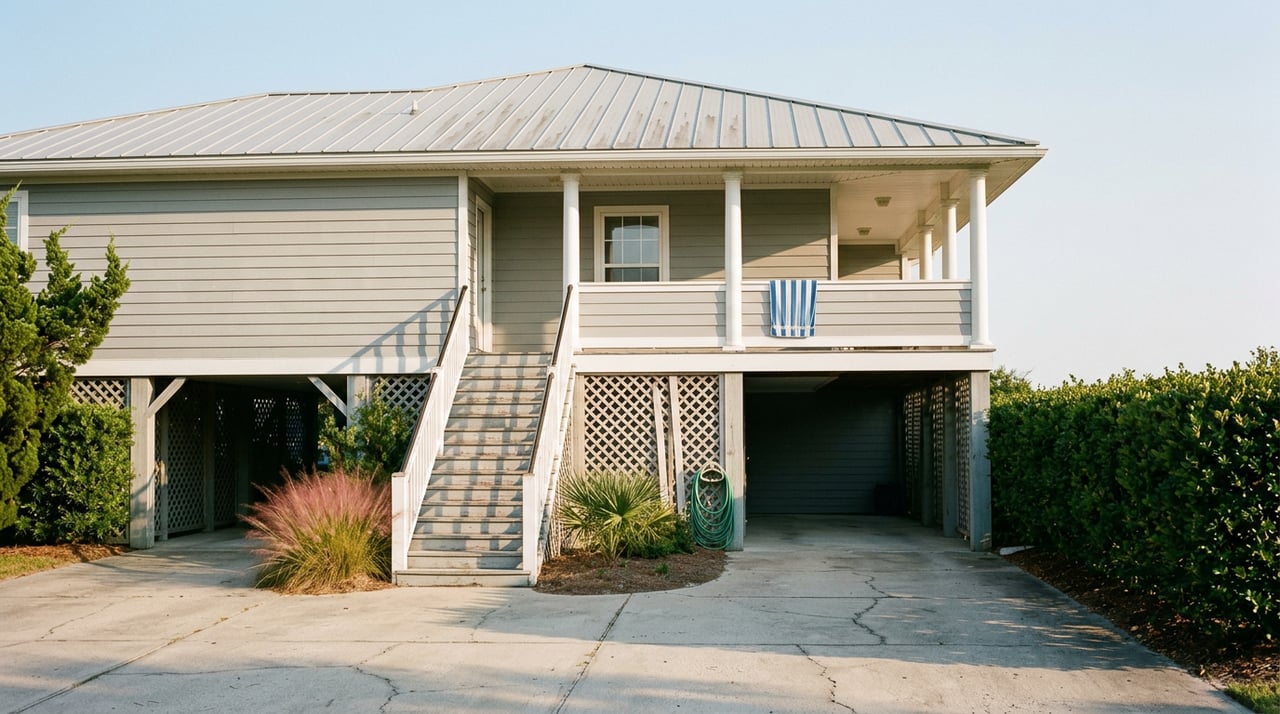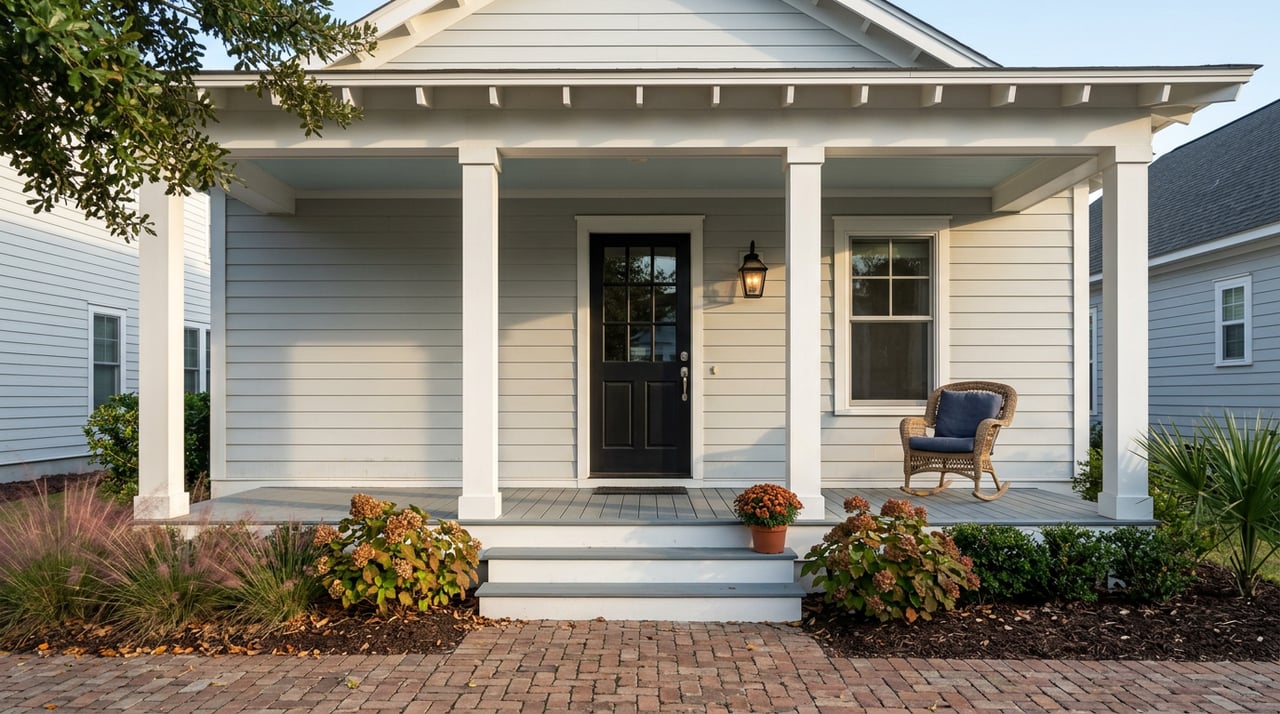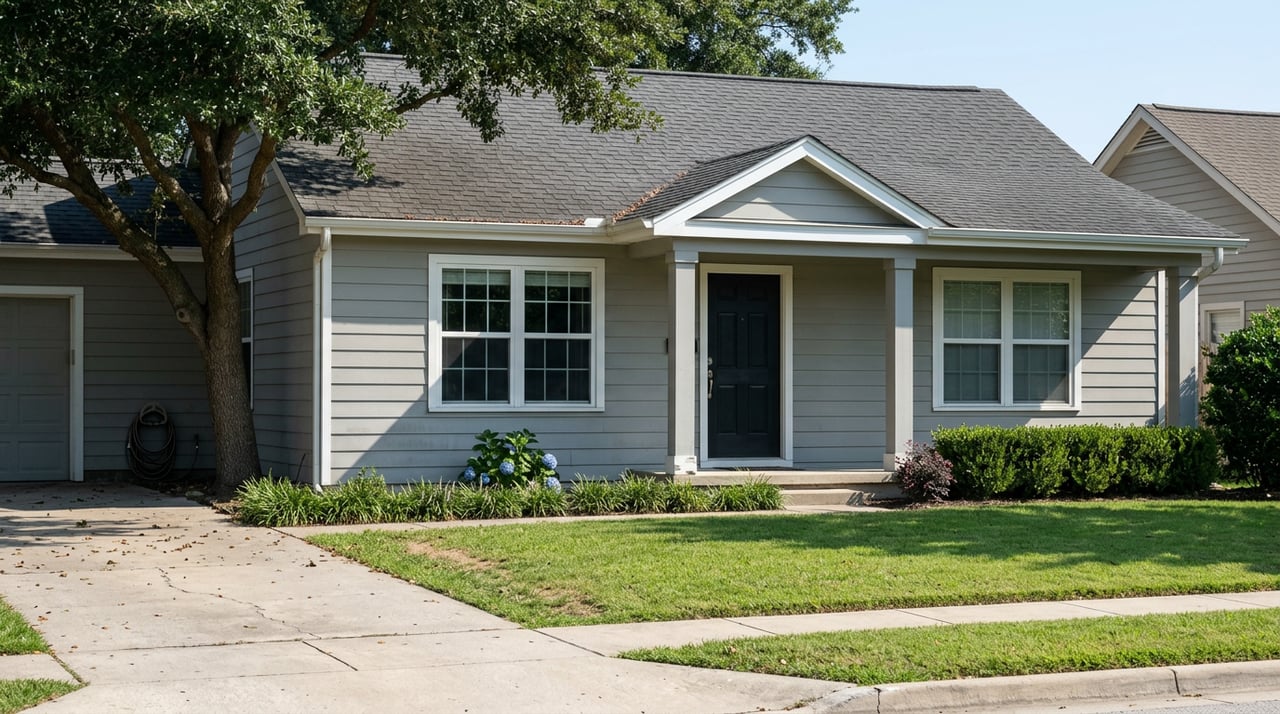
Pull up three different housing reports on Jacksonville, North Carolina right now and you'll get three different stories about the same year. One puts the market's typical home value up 8.8% over the past twelve months, as of late June 2026. Another has the median sale price up a much more modest 2.4% over the three months ending in May 2026. A third, using January 2026 numbers, has prices essentially flat, up a rounding error of 0.01% year over year.
That's not measurement error. All three land in roughly the same price range, the low $200,000s to mid $240,000s. What they disagree on is the trend line, and that disagreement is the tell. When multiple data providers looking at the same zip code can't agree on whether the market grew 0%, 2%, or 9%, it usually means the market isn't one market anymore. It's two, and something is holding them apart.
In Jacksonville, that something has a name most housing reports never mention: the Basic Allowance for Housing, or BAH, the monthly stipend the Department of Defense pays service members to cover rent or a mortgage. It's not a subsidy in the usual sense. It's closer to a price anchor, and it's doing more to shape what happens in this market than the mortgage rate is.
Two Markets Wearing One Zip Code
Camp Lejeune sits on 246 square miles along the coast, its Main Gate off NC Route 24 about ten minutes from downtown Jacksonville. It's the Marine Corps' primary East Coast base, and it puts a steady, well-documented buyer pool into the local market every year regardless of what mortgage rates or national headlines are doing.
Camp Lejeune's BAH rates rose 4.5% from 2025 to 2026, part of a broader national adjustment. Published 2026 rates for the installation range from $1,578 a month for junior enlisted service members with dependents up to $2,586 for the most senior officers with dependents. For a large share of that range, especially E5 and above, that monthly allowance is enough to cover a mortgage payment on a home in the $200,000 to $350,000 band using a VA loan, which requires no down payment and no private mortgage insurance.
That band isn't incidental. It's where most of Jacksonville's transaction volume actually happens. A median three-bedroom rental in the area runs around $1,500 a month, which means most military families have some margin left in their allowance even before they consider buying. When a large, steady pool of buyers can purchase in a specific price band with zero down and no PMI, that band behaves differently than the rest of the market. It absorbs inventory fast. It holds price. And it does that regardless of what's happening with the 30-year rate.
Six Days Versus Two Months
Here's where the three-report contradiction starts to make sense. One report has homes going to pending in around six days. Another shows the average listing sitting for 42 days as of the three months ending in May 2026, nearly double the 24 days it took over the same period the year before. A third, pulling January 2026 numbers, shows homes with price reductions jumping from 2.25% to 31.21% year over year, even as the ratio of sale price to list price held steady near 97%.
Put those together and a shape appears. Homes priced inside the BAH-accessible band move in days, because there's a ready, financed buyer waiting for exactly that price point. Homes priced above it, or homes that were listed assuming last year's pace would hold, are the ones sitting for 42 days and eventually taking a cut. The overall averages blur these two behaviors into one number, which is why the "market" looks fast in one report and slow in another. It's not that the data disagrees. It's that each report is averaging across a split that none of them names.
This matters most for sellers pricing a home this fall. If a listing sits in that $200,000 to $350,000 range and shows well, the six-day pending time is a realistic expectation. If it sits above that range, or below it in a way that misses the rental comparison entirely, the 42-day average and the one-in-three chance of a price cut are the more honest planning numbers.
What Nearby Towns Actually Cost to Live In
Families relocating for Camp Lejeune or MCAS New River rarely limit their search to Jacksonville proper. The surrounding towns pull from the same base but offer a different day-to-day trade, mostly around commute and pace rather than price alone.
| Area | Typical Off-Base Rent (3BR) | Everyday Character |
|---|---|---|
| Jacksonville | Anchors around the area median of roughly $1,500/month | Closest to the Main Gate, most convenient overall |
| Sneads Ferry | Roughly $1,600–$1,900/month | Waterfront on the New River and Intracoastal Waterway, quieter and more rural |
| Swansboro | Roughly $1,700–$2,000/month | Coastal setting, higher housing costs than the other three |
| Hubert | Below the Jacksonville median | Fastest back-gate commute of the group |
None of these towns is objectively "better." They're different trades on the same BAH dollar. A family choosing Sneads Ferry is buying waterfront access and a slower pace for a few hundred extra dollars a month. A family choosing Hubert is buying commute time. Jacksonville itself remains the default because it's the most convenient and the most affordable starting point, which is part of why it absorbs the largest share of BAH-driven demand and shows the sharpest split between fast-moving and slow-moving inventory.
The Waitlist That Pushes Families Into Buying Sooner
One more piece of friction rarely shows up in market reports: on-base housing availability. The installation's own housing office publishes wait-time estimates by neighborhood and unit type, and as of an update earlier this summer, some categories carried waits as short as one to two months while newer or renovated on-base neighborhoods ran closer to eight months or more.
That spread matters for timing. A family expecting a short wait for on-base housing who instead lands in a longer queue often ends up shopping the off-base market on a compressed schedule, right around the same PCS season everyone else is moving too. That seasonal crunch adds another layer to why days-on-market and price-cut data can look so different depending on which month you sample.
Financing conditions add one more variable. Freddie Mac's primary mortgage market survey put the 30-year fixed rate at 6.48% and the 15-year fixed at 5.79% as of June 4, 2026. Those rates matter less to a BAH-covered VA buyer than they do to a conventional buyer purchasing above that price band, which is another reason the market splits the way it does rather than moving as one unit when rates shift.
Where Jacksonville Sits Against the Rest of the State
Zoom out and the local pattern looks even more unusual. Statewide, NC Realtors put North Carolina's median sales price at $360,000 as of February 2026, with inventory up 11% year over year to a 5.02-month supply, a market drifting toward balance. Federal Housing Finance Agency data through the second quarter of 2025 had North Carolina's annual appreciation rate at 3.3%, below the national rate of 3.8%.
Only five North Carolina metros beat both of those benchmarks: Rocky Mount, which led at 11.3%, Jacksonville, Pinehurst, Winston-Salem, and Greensboro-High Point. Durham-Chapel Hill posted the slowest positive growth in the state at 1.6%, and Greenville was the only metro to post an outright decline, at negative 3.4%.
Jacksonville outrunning both the state and national appreciation rate isn't the story you'd expect from a small military town, and it isn't explained by the usual big-metro drivers like job growth or population influx alone. A steady, BAH-financed buyer pool that doesn't disappear when rates rise is a more specific answer, and it's one that only shows up if you're watching the local mechanics rather than the statewide headline.
What This Means For Your Offer
If you're comparing Jacksonville against Sneads Ferry, Swansboro, or Hubert, the median price on a portal won't tell you much. The more useful question is where a specific listing sits relative to that $200,000 to $350,000 band, because that's the line separating a home that pends in less than a week from one that sits for six weeks and takes a cut. Sellers pricing into that band this fall should expect fast movement if the home shows well. Sellers pricing above it should plan around the 42-day average, not the six-day headline.
Buyers using a VA loan should also know that BAH isn't the whole budget. It covers a lot in this market, but utilities, insurance, and maintenance still come out of pocket, and a family expecting a short on-base wait should have an off-base backup plan ready before orders arrive rather than after.
If you're weighing Jacksonville against the surrounding towns, or trying to figure out where your BAH actually goes furthest without guessing at a portal's estimate, Turn-Key Realty can walk through the specific numbers on a specific address. Get Your Home Valuation and we'll show you exactly where a listing sits in this market, not just what the algorithm guessed.
A Couple of Questions Worth Answering Directly
Does BAH really cover a full mortgage payment in Jacksonville? For many E5 and above families financing a home in the $200,000 to $350,000 range with a VA loan, yes, the allowance typically covers the payment. It's less reliable outside that range or for junior enlisted service members, so it's worth running the actual numbers against a specific listing rather than assuming.
Why did my online estimate and my agent's comp price disagree by ten or twenty thousand dollars? Automated valuations average across recent sales in an area, and when a market is splitting between a fast-moving BAH-financed band and a slower-moving band above it, that average can land somewhere neither buyer actually experiences. A local comp pulled from recent closings in the same price tier is a more reliable number than a sitewide estimate.