Looking for a place that feels like your beach escape now and helps offset costs when you are not using it? In Oak Island, that idea is more realistic than in many coastal markets because the town already functions as a second-home and vacation-rental destination. If you are thinking about buying a home you can enjoy personally and also rent for part of the year, this guide will help you understand what matters most before you make a move. Let’s dive in.
Why Oak Island Fits Hybrid Buyers
Oak Island has the kind of market profile that naturally supports hybrid ownership. Tourism is a major part of the local economy, and the town points to $975.11 million in Brunswick County visitor spending in 2021, along with $4,659,767 in Oak Island accommodations-tax collections from July 1, 2021 through June 30, 2022.
That tourism base matters because it supports the steady visitor demand many second-home buyers want to see. It also helps explain why Oak Island has long operated as a place where personal use and short-term rental use often overlap.
The housing and population data also fit that picture. Oak Island had 8,396 residents in the 2020 census and an estimated 9,030 residents in 2024, with a median age of 62.3, an owner-occupied housing rate of 89.7%, and a median owner-occupied home value of $456,500.
Older planning data adds useful context. A 2017 town plan using 2013 Census data reported that more than half of housing units were vacant, with most of those vacant units used as second homes or vacation rentals. While that is not current inventory data, it shows that seasonal and hybrid ownership has been part of Oak Island for years.
What Housing Stock You Will Find
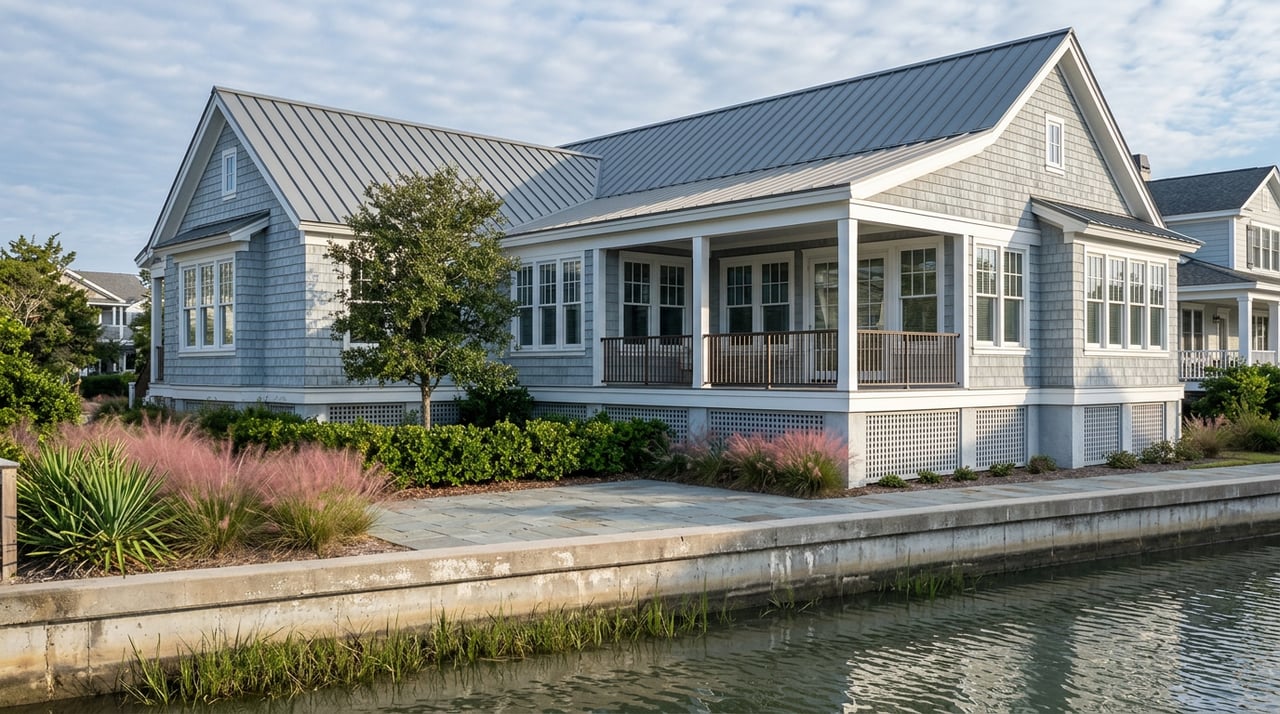
If you picture a classic beach house or cottage, you are likely picturing the right product type for Oak Island. A current Census-derived housing profile estimates that 86.7% of housing units are detached single-family homes, while attached homes account for 1.7% and mobile homes for 6.5%.
For many buyers, that means your search will focus on standalone homes rather than large multifamily buildings. It also means details like parking, storage, outdoor showers, deck space, and durable finishes often matter more here than amenities you might prioritize in a condo-heavy market.
The same housing profile estimates a median construction year of about 1997. In practical terms, that can mean you may find homes with solid beach-house layouts but also potential needs around updates, storm-readiness, elevation documentation, or code-related improvements.
Focus on Flood Risk First
In Oak Island, flood exposure is not a side issue. It is one of the first things you should review because it affects insurance, renovation planning, and your long-term carrying costs.
According to the town, areas prone to flooding include oceanfront areas, estuary shoreline, and a low valley between 58th and 40th streets along Dolphin and Pelican Drive. That does not mean every home in those areas is a poor fit. It means you need property-level due diligence before you rely on rental income or renovation plans.
The town’s Development Services department oversees zoning, CAMA, FEMA, fire codes, and building permits. The town also states that new buildings in a floodplain must be elevated one foot above base flood elevation, and all construction must meet 150 mph wind-zone requirements.
There is another key rule buyers should understand. If improvements meet or exceed 50% of a structure’s pre-damage value, current code compliance can be triggered. That can affect the true cost of updating an older home, especially if you are planning a major renovation after purchase.
Flood insurance should also be part of your base-case budget. The town notes that standard homeowners insurance does not normally cover flood damage, so you should treat flood insurance, elevation certificates, and mitigation work as part of the real ownership math.
Beach Access Can Shape Rental Appeal
In a hybrid purchase, location is not just about the view. It is also about how easy the home is to use for you and for guests.
Oak Island says it has 65 public beach access locations and nearly 1,500 parking spaces, more than any other island community in the Carolinas. Paid parking is enforced from April 1 through September 30, and resident and season permits are available.
That makes proximity to a public beach access point a practical value driver. A home that offers easier beach entry, better parking, or simpler logistics for unloading gear can stand out to both owners and renters.
The Oak Island Pier area can also matter when you compare homes. Even if two listings look similar on paper, small location differences related to access, parking, and nearby beach activity can influence how often you want to use the home and how appealing it may be to vacation guests.
Understand the Tax Stack on Short Stays
If you plan to rent your Oak Island home, you need to know how public taxes work before you project income. On shorter stays, the combined tax burden can be meaningful.
Oak Island levies a 5% accommodations tax on rentals of homes, cottages, and similar lodging rented to the same person for less than 90 continuous days. Monthly filings are due by the 20th, and the town says that if the property is listed with a rental agency, the agency is responsible for reporting and paying that tax.
Brunswick County adds a 1% room occupancy tax on accommodations rented for less than 15 days. The North Carolina Department of Revenue also says accommodation rentals are subject to the general state, local, and transit sales tax.
Because Brunswick County’s general sales tax rate is 6.75%, a stay shorter than 15 days faces about 12.75% in combined public taxes. Stays of 15 to 89 days still owe the town accommodations tax and sales tax, but not the county room occupancy tax.
Account for Holding Costs Year-Round
A hybrid beach home can be enjoyable and useful, but it still needs to work when the calendar turns to slower months. That is why your ownership budget should go beyond the mortgage payment.
Oak Island’s 2025 property tax rate is $0.20 per $100 of value. The town also bills a sewer district fee of $601.78, with annual taxes due September 1 and becoming past due after January 5.
Those town-level costs may look manageable on their own, but they are only part of the picture. You should also model insurance, flood insurance, utilities, maintenance, storm prep, cleaning, and seasonal wear and tear.
A practical question to ask is simple: can the property comfortably carry its costs through the winter if bookings soften? If the answer is yes, you are looking at the property the right way.
Seasonality Is Real in Oak Island
Oak Island is a beach market, and the weather pattern supports a clear seasonal rhythm. NOAA climate normals for the nearby Southport 5 N station show average highs in the low 90s in July and August, with average lows in the low 70s, while January is much cooler.
That weather pattern lines up with the way many coastal buyers already expect rentals to perform. Summer tends to be the strongest stretch, while winter demand is typically softer.
Third-party short-term rental analytics also describe Oak Island as highly seasonal. AirROI estimates average annual revenue of $41,317, average occupancy of 38.0%, an average daily rate of $466, and RevPAR of $183, with July typically the top revenue month and January the weakest.
It also estimates median monthly earnings of about $3,891 and median occupancy around 34%. These are market estimates rather than guarantees, but they are useful because they show how widely results can vary from one property to another.
How to Evaluate an Oak Island Listing
The best hybrid properties usually win on practicality. A beautiful home may still underperform if it is hard to access, expensive to insure, or difficult to maintain.
As you compare listings, focus on the features that affect both personal enjoyment and rental usability:
- Easy access to the beach
- Enough parking for typical guest groups
- Bedroom count and layout that fit family travel patterns
- Durable finishes that hold up to sand, salt, and frequent turnover
- Flood-zone placement and available elevation documentation
- Renovation needs that could trigger code upgrades
- HOA rules or deed restrictions related to short-term rentals
These questions matter because Oak Island’s market has a wide spread in property performance. Two homes with similar prices can have very different carrying costs, insurance profiles, and rental appeal.
A Smart Hybrid Buying Strategy
If your goal is both lifestyle and income support, it helps to think in layers. Start with the home you will actually enjoy using, then test whether the numbers still work under conservative assumptions.
A strong process usually looks like this:
- Confirm use rules first. Check HOA documents or deed restrictions for short-term rental limits.
- Review flood and elevation details. Look at the flood map, elevation certificate, and likely insurance needs.
- Study access and parking. Consider how easy the property is to use during peak beach season.
- Stress-test the budget. Include taxes, sewer fee, insurance, maintenance, and slower winter months.
- Review renovation risk. Make sure planned updates will not surprise you with major code-related costs.
This kind of approach helps you buy with confidence instead of relying on best-case projections. In a coastal market, the details often matter more than the headline price.
Why Local Guidance Matters
Buying a hybrid vacation home in Oak Island is not just about finding a house near the water. It is about understanding how location, access, flood exposure, carrying costs, and seasonal demand work together.
That is where a local, hands-on real estate team can make a real difference. You want clear eyes on the property itself, practical guidance on what to verify, and support that helps you avoid expensive surprises.
At TurnkeyRealty, the goal is to make complex coastal purchases feel more manageable and more predictable. If you are considering an Oak Island home as both a getaway and a rental, connect with TurnkeyRealty for personalized guidance on finding the right fit.
FAQs
What makes Oak Island a good fit for a hybrid vacation home purchase?
- Oak Island has a long-established second-home and vacation-rental pattern, a tourism-driven local economy, and housing stock that is heavily made up of detached single-family homes, which often align well with hybrid personal-use and rental goals.
What taxes apply to Oak Island short-term rentals?
- For many short stays, the public tax stack can include Oak Island’s 5% accommodations tax, Brunswick County’s 1% room occupancy tax for rentals under 15 days, and North Carolina state and local sales tax, which brings the combined public tax load on stays under 15 days to about 12.75%.
What flood issues should buyers review for an Oak Island vacation home?
- You should review the property’s flood-zone location, elevation information, likely flood-insurance needs, and whether any planned renovation could trigger current code compliance requirements.
How seasonal is the Oak Island vacation rental market?
- Oak Island is highly seasonal, with summer usually driving the strongest demand and winter bringing slower activity, which means buyers should make sure the home can carry costs during lower-booking months.
What listing features matter most for Oak Island rental appeal?
- Beach access, parking, bedroom layout, durable finishes, and the home’s flood and insurance profile are some of the most important factors when you evaluate whether a property can work well for both personal use and guest stays.